
Your agents can write code.
They still get lost.
KnoSky turns any repo or folder into an explorable city — and grounds your AI in your own source, with optional allow/deny receipts.
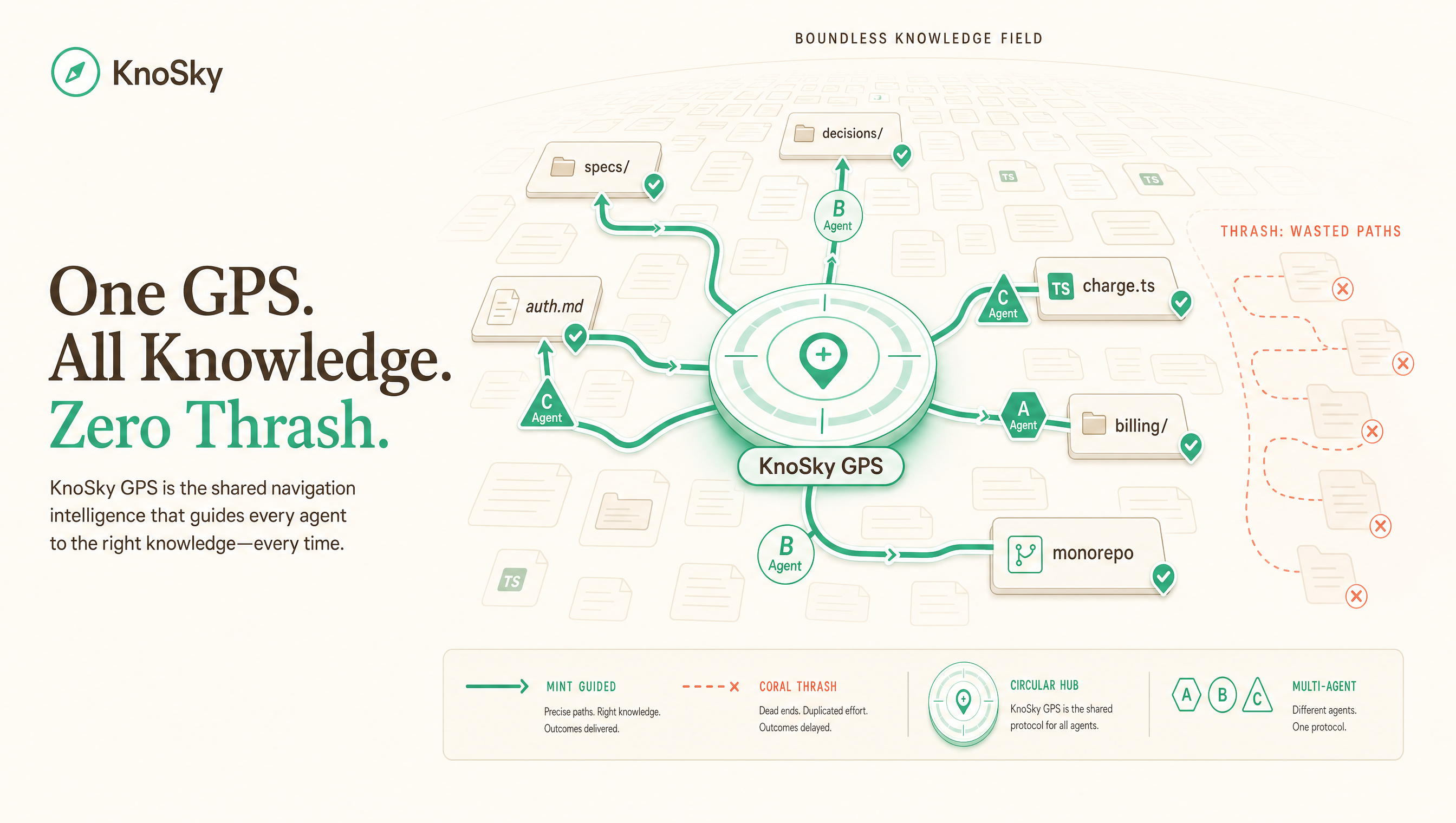
The maze is the product problem
Agents don’t need another chat box. They need navigation through thousands of files and docs — without thrashing.
Wrong corridor
Open twelve files. Miss the one that matters.
Token thrash
Every dead end is money before a good edit.
No shared GPS
Each tool invents its own shortcuts.
No receipt
Permission is vibes after the fact.
Agentic workflows on every PR can quietly accumulate large API bills.
Industry problem proof — not a KnoSky score. GitHub Blog →
When navigation is guided
From our own small test suite — not someone else’s marketing numbers.
Small guided-vs-wandering test (5 tasks): guided found the right file every time; wandering didn’t. Details in the docs if you want them.
Three GPS moves
Index the maze
Build a navigable model of repos & docs on the user’s machine.
Share one menu
Assistants ask for paths via MCP — not freestyle monorepo walks.
Optional Mode B
Identity → policy → receipt (or a useful deny).
Everything that ships with KnoSky
One local protocol for map → route → optional receipt. Less thrash cost for teams. Less upload risk for careful CTOs. Here’s what ships — including the optional Enterprise path for proof.
Efficiency
Our own small guided vs wandering study: 68% fewer tokens, 70% fewer tool calls, 6× faster to the right file. Not someone else’s deck.
Risk averted
Local-first (no body vault). Map tools stay read-only. Share-safe can fail closed on secret-like text. Audit pack a CISO can re-check.
Outcomes
Fewer dead AI pilots after Security. Less “where is billing?” thrash. Optional architecture hangboard so risk districts show up before outage week.
Local maze map
Indexer turns repos and docs into a navigable graph on your machine.
- Districts and buildings from folders/files
- Share-safe / fail-closed secret scan options
npx knosky@latest .
City HTML (human skin)
Isometric city so people can walk the same map agents route through.
- Not the agent GPS hero metaphor
- Self-contained city file
- Teammate-shareable picture of the system
MCP GPS tools
One frozen menu assistants share — search, route, bundle, policy check.
- Map lookup tools
- Checked route tools
- Security profile: audit query / verify
Mode A and Mode B
Advisory tips or identity + policy + audit receipts.
- Mode A: labeled
ADVISORY_UNAUTH - Mode B:
ALLOW/DENY_*+ lease agent-registermints leaseId
Connect your tools
Wire once, same GPS across tools you already use.
- : Claude Code, Cursor, Codex, Hermes
- : VS Code, Greptile recipe, GHA PR-GPS
- Coding packs omit audit tools on purpose
Doctor and honest limits
Know what you may honestly say for this install.
knosky doctorscorecard- Ladder L0 to L3 honesty
- Windows lockdown realism
L3 swarm foundation
Local multi-agent coordinator — leases, claims, quotas, heatmap, bench.
- Not multi-tenant cloud fleet product
- Not swarm-safe everywhere marketing
- Doctor: FOUNDATION present
PR-GPS Action
Advisory navigation comments on pull requests.
- Never blocks the build by default
- Structure/import hints — not a body store
Docs and guides
Tool menu, decision codes, ladder, wiki, llms.txt.
- knosky.com and knosky.wiki
- Agent-readable product summary
- Open protocol under FSL-1.1-MIT
Enterprise / Regulated Mode
Optional jacket for serious pilots — safer defaults and paperwork.
- Security report after index
audit pack+audit verify- Read-only map guarantee documented
Architecture intel
District hangboard: docs, ownership, tests, churn, drift, risk.
knosky intel- Local proxies — not a full bank SAST/CVE box
- CODEOWNERS helps ownership scores
Private synthetic gauntlet
Disposable attack hosts + multi-role checks + rollup report.
- Secrets, ignores, traversal, injection, stale…
- Private by default — not a public “attack-tested” logo
- Never customer source as fixtures
doctor proves on that install.
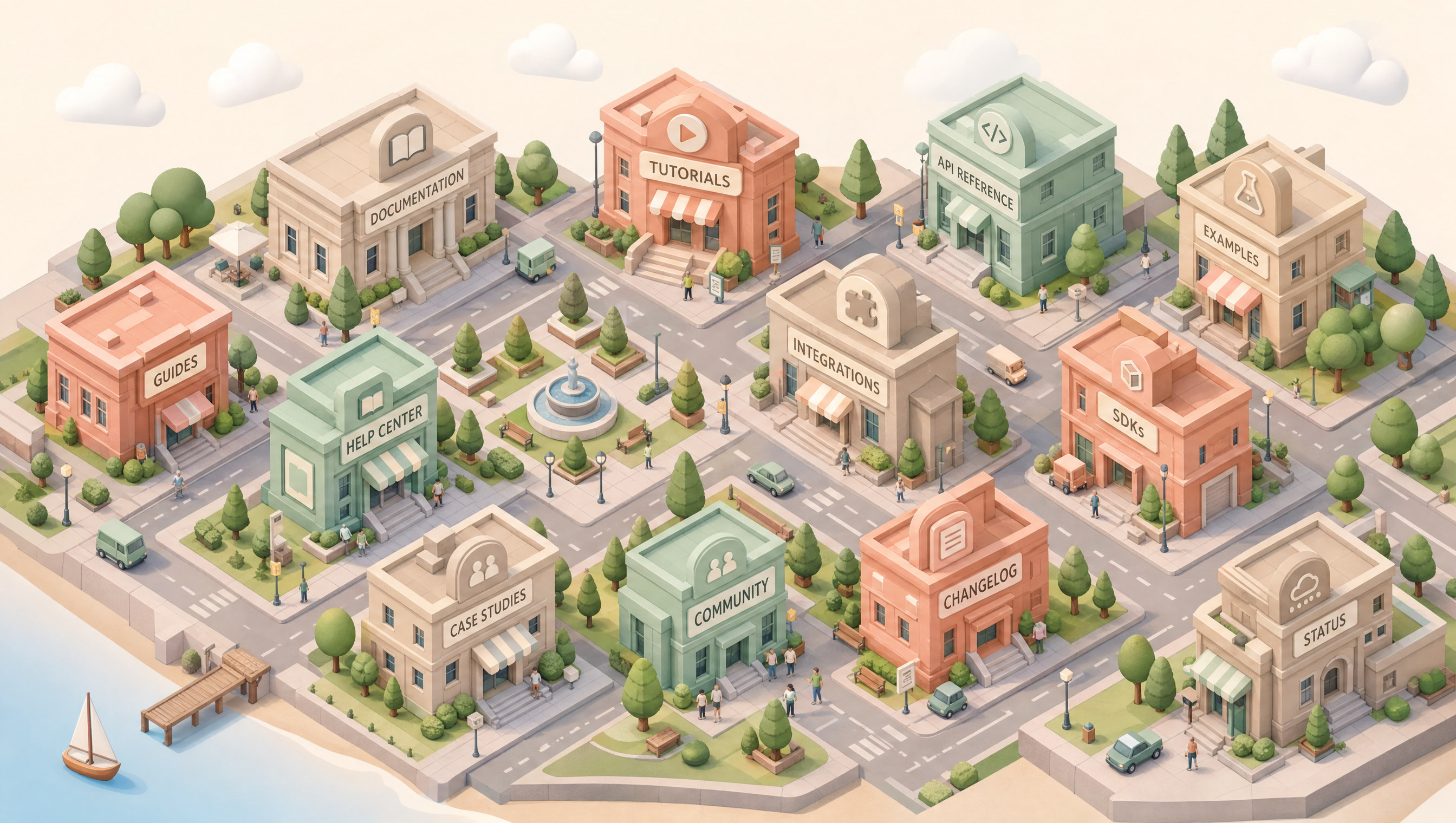
Human skin · multi-depth isometric city · not the agent GPS metaphor
The city is how humans see the map
Agents need routes through a maze. Humans need a place they can walk. The multi-depth isometric city is the skin of KnoSky — a place humans walk, on the same local map agents route through. It is intentionally not the hero: product category is GPS for agents.
Explore districts, find buildings, hand a teammate a picture of the system. Depth and protocol still live behind install + wiki.
Run npx knosky@latest . in your repo. KnoSky builds a local city from your folders and files — not a canned marketing skyline.
Install on your machine
One command in your project folder. No account. Builds a local map from your code.
npx knosky@latest .
Install steps